What Is a Combi Oven? The Complete Guide for Commercial Kitchens
Ask any experienced chef what single piece of equipment has made the biggest difference to their kitchen, and a combi oven will be mentioned more often than anything else. It is the most versatile cooking appliance available to a professional kitchen, capable of steaming, roasting, baking, regenerating and proofing, all in a single unit. Yet for all its dominance in professional kitchens, the question of what a combi oven actually is, what it does and whether it is the right choice for a given operation is still frequently misunderstood.
This guide covers everything you need to know: how a combi oven works, what you can cook in one, the difference between a combi and a convection oven, what to consider when choosing one, and which models GMSE stocks and recommends for different types of commercial kitchens.
Browse GMSE's commercial oven range
In This Guide
1. What Is a Combi Oven?
A combi oven is a commercial cooking appliance that combines three distinct cooking modes in a single unit: steam, convection and a combination of both. The name comes from this combination of cooking methods; "combi" is short for combination, and the ability to switch between or blend these modes is what makes the appliance so versatile and so central to professional kitchen operations worldwide.
Unlike a conventional oven that applies dry heat only, a combi oven incorporates a built-in steam generation system alongside its convection heating. The result is an oven that can produce precisely controlled levels of humidity, from zero percent humidity for dry roasting through to full 100 percent steam for steaming and poaching, and everything in between. This level of climate control is simply not possible with any other single cooking appliance.
Combi ovens are used across the full spectrum of commercial food environments: restaurant kitchens, hotel banqueting operations, contract catering facilities, hospital and healthcare catering, school kitchens, care home operations and food production environments. Wherever consistent, high-quality cooking output is required at volume, a combi oven is almost always part of the kitchen setup.
2. How a Combi Oven Works: The Three Modes
Understanding the three cooking modes is key to understanding why a combi oven is so useful.
Steam mode
In steam mode, the combi oven generates and injects steam into the sealed cooking chamber, creating a moist, humid cooking environment. Steam cooking is ideal for fish, shellfish, vegetables, rice, pulses and any product where moisture retention, texture and nutritional preservation are priorities. The oven controls the amount of steam generated to maintain precise humidity levels throughout the cooking cycle.
Convection mode
In convection mode, the steam system is off, and powerful fans circulate dry, hot air around the cooking chamber. This produces the same cooking environment as a conventional fan oven but with considerably more precision and, in most commercial models, significantly better airflow and temperature distribution. Convection mode is used for roasting meats, baking breads and pastries, and any application where a dry, even heat is the requirement.
Combination mode
This is what separates a combi oven from every other piece of cooking equipment in a commercial kitchen. In combination mode, the oven applies both convection heat and steam simultaneously, at levels the operator can adjust to suit the product being cooked. The result is precise humidity and temperature control throughout the cooking cycle. A joint of meat cooked in combination mode will develop colour and crust from the dry heat while the steam maintains internal moisture and reduces shrinkage - something dry roasting alone cannot achieve. Combination mode also enables significantly faster cooking times than conventional methods, often reducing cook times by 20 to 30 percent.
Most modern combi ovens, including the Rational iCombi Pro range, incorporate intelligent climate sensors that continuously monitor the cooking environment and automatically adjust temperature and humidity to maintain the correct conditions throughout the cycle, regardless of how much food is loaded.
3. What Can You Cook in a Combi Oven?
The short answer is almost everything. The longer answer:
Meat and poultry
Combination mode is particularly effective for roasting joints and whole birds. The simultaneous application of heat and steam dramatically reduces the weight loss through shrinkage that occurs in conventional dry roasting, where up to 30 percent of a meat joint's weight can be lost to moisture evaporation. The result is a more tender product with better yield per kilogram, which has a direct and meaningful impact on food cost.
Fish and seafood
Steam mode is the standard method for cooking delicate fish and seafood in a combi oven. The controlled humid environment prevents drying and breaking, preserving the texture and natural flavour of the product without the handling required by poaching in liquid.
Vegetables
Steam cooking vegetables in a combi oven retains more nutritional value and natural colour than boiling, with no risk of overcooking through water contact. For high-volume operations, the combi allows large quantities of vegetables to be cooked consistently and quickly, with none of the variability that comes with batch boiling.
Bread and pastries
In convection or combination mode, a combi oven produces consistent, even baking with controlled crust development. The injection of steam during the early stages of bread baking produces a characteristic glossy, well-developed crust. For pastry applications requiring a dry finish, pure convection mode delivers precise results.
Regeneration
One of the most valuable capabilities of a combi oven in high-volume catering environments is regeneration, reheating pre-cooked chilled or frozen food to service temperature quickly and consistently, without drying out or overcooking. Hospitals, care homes, schools and large contract catering operations use this function extensively.
4. Key Benefits for Commercial Kitchens
Equipment consolidation
A combi oven replaces several separate pieces of kitchen equipment. In a typical commercial kitchen, it can take the place of a conventional oven, a separate steamer, a proofer and a holding cabinet. For kitchens where floor space is at a premium, this consolidation has obvious practical value.
Consistency at volume
The ability to programme and save cooking processes means that dishes are reproduced to the same standard regardless of which member of the kitchen team is operating the oven. For operations with variable staffing, or where consistency across multiple sites matters, this is a significant operational advantage.
Reduced food cost
Lower meat shrinkage and better yield per kilogram means more portions from the same product spend. For high-volume operations cooking meat at scale, this alone can represent a meaningful reduction in food cost over a year.
Speed
Combination cooking is faster than conventional dry roasting or steaming separately. Reduced cook times across a full menu add up to meaningful improvements in kitchen throughput, particularly during busy service periods.
Energy efficiency
Modern combi ovens from manufacturers such as Rational and Unox are designed for energy efficiency, with intelligent systems that minimise energy consumption by monitoring and responding to load size and cooking conditions throughout each cycle.
5. Combi Oven vs Convection Oven
The distinction between a combi oven and a convection oven is one of the most frequently misunderstood in commercial kitchen equipment.
A convection oven circulates dry hot air around the cooking chamber using a fan. It bakes and roasts effectively but has no steam capability. It cannot produce the moisture retention, the combined cooking environment or the regeneration capability of a combi. It is a capable and cost-effective tool for operations with focused, consistent baking requirements.
A combi oven does everything a convection oven does, and significantly more. It adds full steam capability, combination mode, precise humidity control and the versatility to handle a far broader range of products and cooking applications. The trade-off is a higher purchase price, greater installation complexity (water supply and drainage are required) and more involved maintenance, including periodic descaling of the steam system.
For most restaurant kitchens, hotel operations and contract catering facilities, a combi oven is the correct specification. For operations with a tightly focused baking output - a café or food-to-go operation producing a consistent range of baked goods - a dedicated baking oven may be a more appropriate and cost-effective choice.
6. What to Consider When Choosing a Combi Oven
Capacity and grid size
Combi ovens are sized by the number of gastronorm trays they can hold simultaneously - typically 6, 10 or 20 GN (gastronorm). The right size depends on the number of covers your kitchen serves and the volume of food you need to prepare during a single cooking cycle. As a general guide, a 6-grid combi suits kitchens producing up to around 80 to 100 covers per service; a 10-grid covers mid-to-high-volume operations; and a 20-grid is suited to large-scale contract catering and production kitchens.
Power supply
Most commercial combi ovens require a three-phase electrical supply. Compact or entry-level models are available on single-phase, which is more accessible for smaller operations without three-phase infrastructure. Confirm your power supply before specifying a model.
Water supply and drainage
The steam generation system requires a cold water inlet and proper drainage for condensate. Water hardness is also a consideration in hard water areas; scale build-up in the steam generator is the most common cause of premature component failure, and regular descaling is essential.
Ventilation
Commercial combi ovens require appropriate kitchen ventilation. Speak to your kitchen designer or engineer to confirm the ventilation requirements for your specific model and installation.
Smart features
Modern combi ovens from Rational and Unox incorporate intelligent cooking management systems that monitor the cooking environment in real time and adjust conditions automatically. These systems reduce operator error, improve consistency and are particularly valuable in high-volume operations or kitchens with variable staffing levels.
7. Which Combi Oven Does GMSE Recommend?
GMSE stocks two of the world's most respected combi oven ranges for commercial kitchens.
Rational iCombi Pro
The Rational iCombi Pro is the benchmark commercial combi oven - the model against which the entire market measures itself. Available in 6, 10 and 20 grid configurations in both 1/1 GN and 2/1 GN formats, electric and gas, the iCombi Pro uses Rational's iDensityControl technology to continuously monitor and adjust the cooking climate throughout every cycle. The iProductionManager allows up to 12 simultaneous cooking processes in the same oven. The iCare AutoDose system manages the cleaning cycle automatically. GMSE stocks 48 iCombi Pro models across the full range of specifications.
Unox ChefTop Mind.Maps Zero
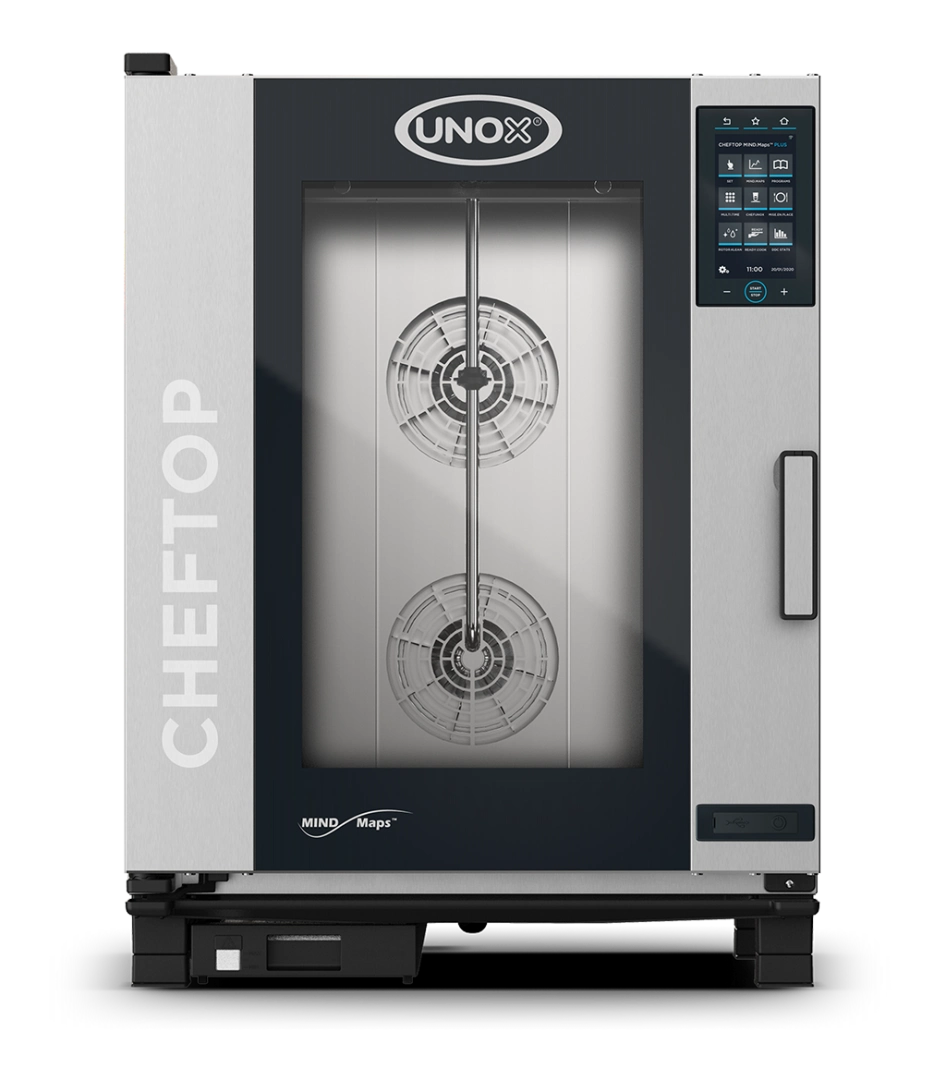
The Unox ChefTop Mind.Maps Zero is Unox's professional combi oven range and the entry point for kitchens looking for combi capability at a more accessible price point. Available in 5, 7 and 10 tray configurations, it brings Unox's Mind.Maps intelligent cooking system and full combi oven capability to smaller and mid-size restaurant and hotel kitchens.
Browse all Rational and Unox combi ovens
View the full Rational range
View the full Unox range
8. What About Baking Ovens?
It is worth noting that not every professional oven is a combi oven. Baking ovens, sometimes called convection baking ovens, are a separate product category suited to different applications.
The Unox Bakerlux range, for example, is a professional convection baking oven designed specifically for bakeries, cafés and food-to-go operations focused on consistent, high-throughput baking of pastries, bread, snacks and similar products. It operates without the steam generation system of a combi oven, making it simpler to install and maintain, and purpose-built for the baking applications it handles.
If your operation is a café or food-to-go business producing a focused range of baked goods, a dedicated baking oven may be a better fit than a full combi. If your operation runs a broad menu requiring versatile cooking capability across multiple applications, a combi oven is the right choice.
9. Common Mistakes to Avoid
Underspecifying on capacity
Choosing a 6-grid combi for a kitchen that needs a 10-grid is one of the most common and costly mistakes in commercial oven purchasing. A machine running at full capacity every service cycle will wear faster and produce less consistent results than one operating with headroom. Specify for your busiest period, not your average.
Ignoring water supply requirements
Discovering that a combi oven requires a water supply that your kitchen does not have, after purchase, is an expensive and avoidable problem. Always confirm plumbing requirements before specifying a combi oven.
Skipping regular servicing
A combi oven's steam system requires periodic descaling, and all mechanical and electrical components need regular inspection. In hard water areas, scale build-up in the steam generator is the single most common cause of premature component failure. Regular servicing every 6 to 12 months keeps the machine performing accurately and extends the lifespan of key components. GMSE provides combi oven servicing and repair across England.
Not training the kitchen team
A combi oven's value is only realised if the kitchen team understands how to use it properly. The three cooking modes, programme management and cleaning routines all need to be covered when a new machine is installed.
Conclusion
A combi oven is the most versatile cooking appliance available to a professional kitchen. Its ability to steam, roast and combine both modes in a single unit, under precise, intelligent control, makes it the natural centrepiece of any commercial kitchen that needs consistent, high-quality output across a broad menu. When properly specified, installed and maintained, it consolidates multiple pieces of kitchen equipment, reduces food cost through better yield, speeds up cooking and supports consistency regardless of who is operating it.
GMSE supplies and services Rational and Unox combi ovens across England, with a 12-month warranty on every machine and full engineer support after purchase. If you are considering a combi oven for your kitchen, contact our team to discuss the right specification for your operation.
Browse new combi ovens
View the Rational iCombi Pro range
View the Unox ChefTop range
Book an oven service
Frequently Asked Questions
-
A convection oven circulates dry hot air using a fan and has no steam capability. A combi oven adds full steam generation alongside convection heating, giving the operator three cooking modes: steam, convection and combination. This versatility allows a combi to handle a far broader range of products and cooking applications than a convection oven alone. The trade-off is a higher purchase price and greater installation complexity, including the need for a water supply and drainage.
-
Yes. A combi oven typically replaces a conventional oven, a steamer, a proofer and a holding cabinet -- consolidating the function of four separate appliances into a single unit. For commercial kitchens where floor space is at a premium and consistency across a broad menu is important, this consolidation is one of the primary reasons for investing in a combi oven.
-
The right size depends primarily on the number of covers your kitchen serves and your daily production volume. As a general guide: a 6-grid combi suits operations producing up to around 80 to 100 covers per service; a 10-grid covers mid-to-high-volume restaurant and hotel kitchens; a 20-grid is suited to large-scale contract catering, production kitchens and high-volume institutional catering. If you are unsure, contact the GMSE team and we can advise on the appropriate specification for your operation.
-
For ovens in regular commercial use, a service every 6 to 12 months is the standard recommendation. Combi ovens with steam systems benefit from more frequent attention to descaling, particularly in hard water areas where scale build-up accelerates. Regular servicing maintains cooking accuracy, extends the lifespan of key components and keeps your oven within its warranty terms. GMSE provides combi oven servicing across England.
-
Most commercial combi ovens require a three-phase electrical supply, particularly floor-standing and larger models. Compact or entry-level table-top combi ovens are typically available on single-phase power, making them more accessible for smaller operations without three-phase infrastructure. Always confirm the power supply requirements for your specific model before purchase.
-
Yes. GMSE provides servicing and repair for commercial combi ovens across England, covering all major brands including Rational and Unox, whether purchased from GMSE or from another supplier. Our engineers carry out combi oven servicing as part of their regular work, including steam system descaling, heating element inspection, fan and motor checks, control system diagnosis and planned preventive maintenance.