
How to Choose a Commercial Vacuum Packer: The Ultimate 2026 Guide
A vacuum packer is one of the most valuable pieces of equipment in a commercial kitchen or butchery. It extends shelf life by three to five times, reduces food waste, enables sous vide cooking, and makes batch preparation far more practical. It is also one of the most commonly misbought pieces of equipment in the industry. Operators choose the wrong machine type for their product, underestimate how many cycles they will run each day, or buy a machine that looks capable but isn't built for commercial use.
This guide covers everything you need to make the right decision: machine types explained, the key specifications that actually matter, the questions to ask before you buy, and a clear framework for choosing the right vacuum packer from GMSE's range for your operation and throughput.
Browse GMSE's vacuum packer range:
New Table Tops | New Floor Standing | Refurbished
In This Guide
1. Chamber Machines vs External Sealers: Which Do You Need?
Before you look at brands, models or specifications, there is one fundamental decision to make: chamber machine or external sealer?
External sealers work by feeding the open end of the bag into the machine, which draws air out through the bag opening before heat-sealing it. They are compact, relatively affordable, and adequate for low-volume applications with solid, dry foods. Their significant limitation is that they cannot handle liquids, marinades, soft foods or anything that would be drawn out of the bag during the vacuuming process. They are also considerably slower for higher-volume use.
Chamber machines are the standard for professional commercial use. The entire product and bag go inside a sealed chamber. The machine removes all air from the chamber simultaneously, meaning the bag is sealed under equal pressure throughout. This allows you to vacuum pack liquids, soups, marinades, raw meat in its own juices and any other products that an external sealer cannot handle. Chamber machines also produce a stronger, more consistent seal and cycle considerably faster under sustained use.
If you are a restaurant, a butcher or a food production operation, a chamber machine is almost certainly what you need. All of the machines in GMSE's range are chamber vacuum packers.
2. Table-Top vs Floor-Standing
Once you have confirmed you need a chamber machine, the next decision is table-top or floor-standing. This is determined primarily by your daily throughput and the available space in your operation.
Table-top vacuum packers sit on a bench or counter. They are suited to lower-to-mid-volume applications where vacuum packing is part of a daily prep or packaging routine rather than a continuous production process. They are the most common choice for independent butchers, restaurants, delis and farm shops where a machine is used regularly but not intensively for extended periods.
Floor-standing vacuum packers are larger, more powerful machines on integrated stands. They are designed for sustained, high-throughput use where the vacuum packer is running for extended periods throughout the working day. They feature larger chambers, more powerful pumps and faster cycle times. They are appropriate for food processors, meat processors, catering operations producing at scale, and any business where the vacuum packer is central to the production process rather than an ancillary prep tool.
3. Key Specifications to Consider
Once you have established whether you need a table-top or floor-standing machine, these are the specifications that matter most.
Chamber size and seal bar length
The chamber determines what you can physically pack. A small chamber is limiting if you regularly vacuum pack large joints, whole fish or extended cuts. The seal bar length determines the maximum width of bag that can be sealed in a single cycle. If you pack large or irregular items, look for a machine with a longer seal bar. Models in GMSE's range vary from compact chambers suited to standard portion packing through to large chambers designed for full joints and bulk packs.
Pump type: oil pump vs dry pump
Vacuum pumps in commercial machines fall into two main types. Oil pumps deliver stronger vacuum performance, handle continuous use more effectively and are the standard in professional Henkelman and higher-specification Buffalo machines. They require periodic oil changes as part of regular maintenance, but deliver better long-term performance under sustained use. Dry pumps require less maintenance but are generally suited to lower-throughput applications. For daily commercial use, an oil pump machine is the recommended choice.
Throughput and cycle speed
Consider how many bags you will seal per hour, per shift and per day. A machine rated for occasional use will wear quickly in a production environment. Look honestly at your busiest periods and choose a machine with headroom above your peak throughput, not one that will be running at maximum capacity every shift.
Power supply: single phase vs three phase
Most table-top machines operate on standard single-phase power, which is available in any commercial premises. Larger floor-standing machines, particularly double-chamber models, often require three-phase power. If your premises only has single-phase supply, confirm this before specifying a floor-standing machine.
Additional features
Depending on your application, additional features may be relevant. Gas flush capability allows modified atmosphere packaging (MAP), which extends shelf life further for certain products. Water cooling systems reduce heat build-up in machines running continuous high-volume cycles. Integrated label printing is available on selected models for labelling packs as they are sealed. Not every operation needs these features, but they are worth considering if your packaging requirements are specific.
4. Which Machine Is Right for Your Operation?
GMSE's vacuum packer range covers the full spectrum from entry-level table-top machines through to large floor-standing double-chamber units.
Entry level: Buffalo range
For operations on tighter budgets or with genuinely light-use requirements, Buffalo's table-top chamber vacuum packers represent a solid, accessible entry point into chamber vacuum packing. Available in multiple chamber sizes and pump configurations, they are a practical choice for operations that need a capable chamber machine without the investment of a specialist brand.
Mid-range table-top: Henkelman Jumbo, Boxer and Aero series
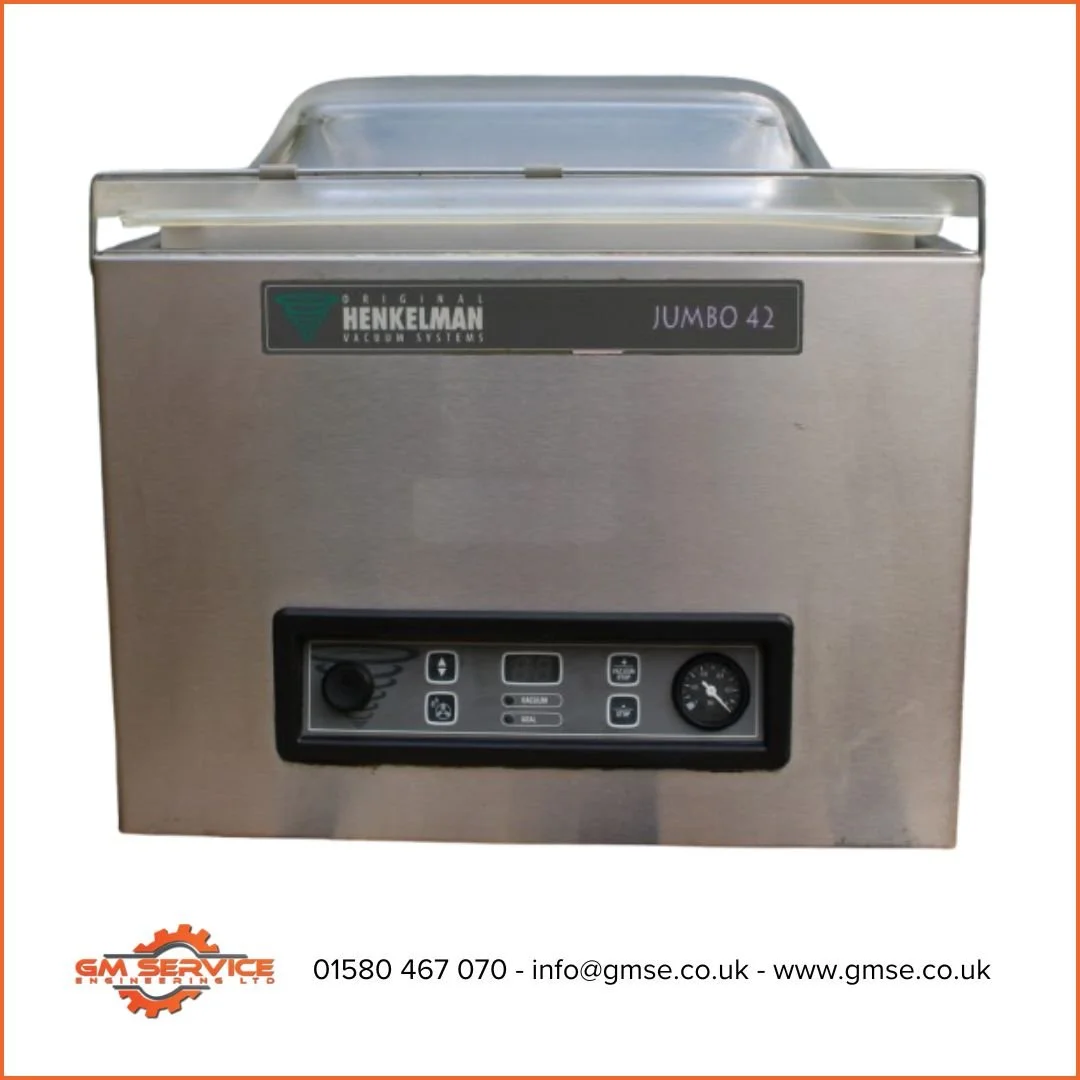
The Henkelman Jumbo 42 is the UK's best-selling table-top vacuum packer for good reason. It delivers a level of build quality, seal consistency and reliability that entry-level machines cannot match, at a price point that suits independent butchers, restaurant kitchens and delis. The Boxer and Aero series extend the range with larger chambers, more advanced cycle programming and variants including water-cooled and ACS models for specific applications. For any operation using a vacuum packer daily as part of a normal prep routine, this is where the range most frequently matches buyer requirements. For a detailed comparison of these models, read our Henkelman range guide.
Premium table-top: Henkelman Aura series
The Aura 42 and Aura 42 XL represent the top of the table-top range. They feature Henkelman's I-Vac intelligent vacuum packing with pre-set programmes for different product types and a full-colour touchscreen panel. For production kitchens, catering operations and food processors that need programme repeatability and precise control without moving to a floor-standing machine, the Aura series is the appropriate choice.
Floor-standing: Henkelman Marlin, Falcon and Polar series
For operations where the vacuum packer is in sustained daily use, Henkelman's floor-standing range covers the full spectrum of requirements. The Marlin series bridges the gap between heavy-duty table-top and full production floor-standing use. The Falcon and Polar series are built for intensive, high-throughput production environments. Double-chamber models within the Falcon and Polar range allow one chamber to be loaded while the other cycles, effectively doubling output on a single machine footprint.
Browse the full GMSE vacuum packer range
New Table Tops | New Floor Standing | Refurbished
5. New vs Refurbished
GMSE regularly stocks refurbished vacuum packers alongside the full new range. Every refurbished machine has been assessed, overhauled and tested by GMSE's accredited engineers before sale, and is backed by the same 12-month parts and labour warranty as new equipment.
A properly refurbished vacuum packer from an engineering-led supplier is a sound investment for most commercial operations. A fully overhauled machine with a good service history can perform identically to a new machine at a considerably lower cost. The key qualifier is the supplier: a machine that has been genuinely refurbished by qualified engineers is a different proposition from one that has simply been cleaned and resold.
6. Common Mistakes to Avoid
Buying an external sealer when you need a chamber machine
This is by far the most common purchasing error. If you are regularly packing raw meat, liquids, marinades or anything with moisture content, an external sealer is not adequate. A chamber machine is the correct specification.
Underspecifying on throughput
A machine running continuously at its rated maximum wears significantly faster than one operating with headroom above normal usage. Buy for the throughput you expect at your busiest, not the minimum that will get by on a quiet day.
Ignoring power supply requirements
Floor-standing models often require three-phase power. Discovering this after purchase creates an expensive problem. Confirm your power supply before specifying any machine above standard single-phase table-top specification.
Buying from a non-engineering supplier
A vacuum packer sold by a dealer with no engineering capability comes with a warranty that may be difficult to enforce in practice. Buying from a business that employs engineers and services the machines we sell means the warranty is backed by genuine technical capability, and after-sales support is available when you need it.
Skipping regular servicing
A vacuum packer that is not serviced regularly will wear faster, produce weaker seals and eventually fail at the worst possible moment. For machines in daily commercial use, a service every six to twelve months is the standard recommendation and a requirement to keep most warranties valid.
Conclusion
Choosing the right commercial vacuum packer comes down to three core decisions: chamber machine (always, for commercial use), table-top or floor-standing depending on your throughput, and the right specification within that category for your chamber size, pump and power requirements. GMSE stocks the full range from Buffalo entry-level through to Henkelman's most capable floor-standing double-chamber units, new and refurbished, all backed by a 12-month parts and labour warranty and supported by an accredited engineering team.
If you are unsure which machine is the right fit for your operation, contact GMSE's team for guidance before you commit.
Browse new vacuum packers:
New Table Tops | New Floor Standing
Browse refurbished vacuum packers
Browse the full Henkelman range
Frequently Asked Questions
-
A chamber vacuum packer places the entire product and bag inside a sealed chamber, removing all air from the chamber before sealing. This allows it to handle liquids, marinades, soft foods and raw meat in its own juices. An external sealer draws air out through the bag opening only, which means it cannot handle products with significant moisture content without spillage. For commercial butchery, restaurant and food production use, a chamber machine is the appropriate specification.
-
The right size depends on what you are packing and how frequently. Consider the largest product you regularly pack and choose a machine with a chamber and seal bar that accommodates it comfortably. Then consider your daily throughput and choose a pump and cycle speed specification that gives you headroom above your peak usage. Undersizing a vacuum packer is one of the most common and costly mistakes in commercial equipment purchasing.
-
Table-top machines sit on a bench or counter and are suited to lower-to-mid-volume daily use. They are the most common choice for independent butchers, restaurant kitchens and delis. Floor-standing machines are larger, more powerful and designed for sustained, high-throughput production environments where the vacuum packer is running for extended periods throughout the day. They feature larger chambers, more powerful pumps and faster cycle times.
-
For daily commercial use, an oil pump is the recommended choice. Oil pumps deliver stronger vacuum performance, handle continuous use more effectively and are the standard in professional-specification machines. They require periodic oil changes as part of regular maintenance but outperform dry pumps under sustained commercial use. Dry pumps require less maintenance but are generally suited to lower-throughput applications.
-
Yes, when purchased from an engineering-led supplier that has genuinely overhauled and tested the machine before sale. GMSE's refurbished vacuum packers are assessed, repaired and tested by accredited engineers and backed by the same 12-month parts and labour warranty as new equipment. Henkelman machines in particular are built for very long service lives, making a properly refurbished example an excellent-value option for most commercial operations.